+91 9810404086, +91 11 42345857
·
info@chrilegal.com
·
Mon - Sat 10:00-19:00
FIRM PROfile

Tag

#IndianLaw
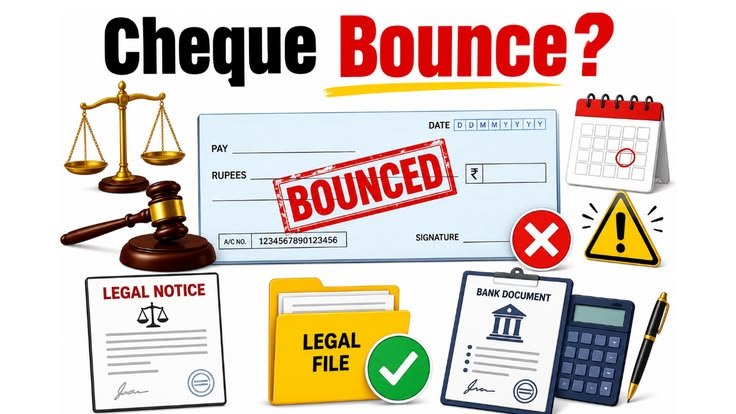
Cheque Bounce: Legal Remedies, Notice, Procedure and Protection Under the Law
A cheque is one of the most commonly used instruments for making payments in business and personal transactions. However, when a cheque is returned unpaid by the bank, it may create financial, legal, and commercial complications. A cheque bounce can occur for several reasons, including insufficient funds, account-related issues, signature discrepancies, payment instructions, or other...
Read More
Anticipatory Bail: Legal Protection Against Arrest
Anticipatory bail is an important legal remedy available to a person who has a genuine apprehension of arrest in connection with a non-bailable offence. It allows an individual to seek protection from arrest before the arrest actually takes place. In India, anticipatory bail is generally sought before the appropriate High Court or Court of Session,...
Read More
Domestic violence is a serious social and legal issue that can affect individuals and families in many different ways. It is not limited to physical abuse. Violence or abusive behavior within a domestic relationship can also involve emotional, verbal, sexual, economic, or psychological abuse. Understanding the legal framework surrounding domestic violence is important for individuals...
Read More
Child custody and maintenance are among the most emotionally challenging aspects of family law. When a marriage or relationship ends, the welfare of the child becomes the highest priority. Indian courts focus on ensuring that children receive proper care, education, financial support, and emotional stability while protecting the legal rights of both parents. Whether you...
Read More
  Consumer Protection Law in India is designed to safeguard the interests of consumers against unfair trade practices, defective goods, and deficient services. With the rise of e-commerce and digital transactions, consumer awareness and legal protection have become more important than ever. The primary legislation governing this area is the Consumer Protection Act, 2019, which...
Read More
Corporate & Commercial Law in India: Complete Legal Guide for Businesses
Corporate and commercial law forms the backbone of India’s business environment. It governs the formation, operation, and regulation of companies and commercial transactions, ensuring businesses operate within a structured legal framework. Understanding corporate and commercial law is essential for business owners, entrepreneurs, and professionals to ensure compliance, mitigate risks, and protect their interests. What is...
Read More
Litigation Process Demystified: From Filing to Judgment
Litigation is a formal process of resolving disputes through the court system. Whether you are an individual, business owner, or organization, understanding the litigation process is crucial for protecting your rights and achieving a favorable outcome. In this guide, we will break down the litigation process in India, explain each stage, and provide practical insights...
Read More
Corporate & Commercial Law in India: Complete Legal Guide for Businesses
Corporate and commercial law in India forms the backbone of business operations, governing companies, partnerships, contracts, and commercial transactions. With India emerging as a global business hub, understanding corporate and commercial law is crucial for entrepreneurs, executives, investors, and legal professionals. This guide provides a detailed overview of the legal framework, compliance requirements, contracts, dispute...
Read More
Litigation Process Demystified: From Filing to Judgment
Litigation in India Explained:  Litigation in India refers to the process of resolving disputes through the formal court system. It is a structured legal mechanism where individuals, businesses, or organizations approach courts to enforce their rights, seek remedies, or defend themselves against claims. The Indian judicial system is one of the largest in the world,...
Read More
Litigation Strategies: How to Navigate Legal Disputes Effectively
Litigation Strategies: Legal disputes can arise in business, family matters, or personal affairs, often leading to financial strain, reputational risk, and emotional stress. Whether you are an individual, a business owner, or a corporate entity, understanding effective litigation strategies is crucial for protecting your rights, minimizing risks, and achieving favorable outcomes. In India, where the...
Read More
1 2

DISCLAIMER

The information and content available on the CHRI Legal website are provided solely for general informational and educational purposes. The information contained herein should not be construed as legal advice, legal opinion, solicitation, advertisement, or a substitute for professional legal consultation. While CHRI Legal makes reasonable efforts to ensure that the information published on this website is accurate and up to date, no representation or warranty is made regarding the completeness, accuracy, reliability, or applicability of such information to any particular legal matter. Laws, regulations, judicial decisions, and legal procedures may change from time to time. Accessing or using this website does not create an advocate-client relationship between CHRI Legal and any visitor. An advocate-client relationship shall arise only upon formal engagement and acceptance of instructions by the Firm. Any articles, publications, legal updates, case discussions, or other materials available on this website are intended for general awareness and should not be relied upon as legal advice for any specific situation. Visitors are advised to seek appropriate professional legal advice based on their individual facts and circumstances before taking any legal action. CHRI Legal shall not be responsible for any loss, damage, claim, or consequence arising from reliance upon information contained on this website. The website may also contain links to third-party websites for reference or convenience, and CHRI Legal does not assume responsibility for the content or practices of such external websites. By accessing and using this website, you acknowledge and agree to the terms of this disclaimer. This website is intended for informational purposes only and does not constitute legal advice or solicitation.